
The ocean has always been humanity’s greatest frontier — and today, technology is rewriting the rules of how we navigate it.
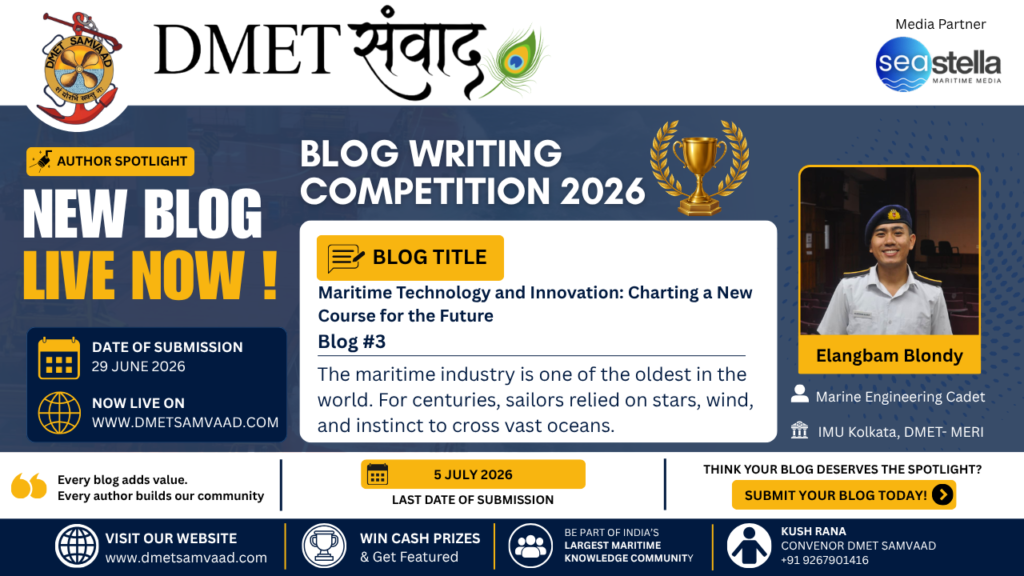
The maritime industry is one of the oldest in the world. For centuries, sailors relied on stars, wind, and instinct to cross vast oceans. Yet in the space of just a few decades, the sector has undergone a transformation so profound that a 17th-century sailor would not recognise the ships of today. From autonomous vessels to green propulsion systems, maritime technology is no longer just about getting from point A to point B — it’s about doing so smarter, safer, and more sustainably than ever before.
The Rise of Autonomous and Smart Vessels
Perhaps the most headline-grabbing development in modern maritime innovation is the emergence of autonomous ships. These vessels, guided by artificial intelligence, sensors, and real-time data, are designed to navigate with minimal or zero human intervention. Norway’s Yara Birkeland, launched in 2021, became the world’s first fully electric and autonomous container ship — a milestone that signalled a genuine shift in what the industry considered possible.
But autonomy isn’t just about removing the crew. Smart vessels collect enormous volumes of operational data — engine performance, fuel consumption, weather patterns, hull stress — and use machine learning to optimise every aspect of a voyage. Predictive maintenance, once a dream, is now a practical tool that prevents costly breakdowns and reduces downtime. The ship of today is as much a floating data centre as it is a vehicle.
Green Propulsion: Sailing Toward Net Zero
The maritime sector accounts for roughly 3% of global greenhouse gas emissions — a seemingly small figure until you realise it places shipping ahead of most individual countries. With international pressure mounting and the International Maritime Organization (IMO) targeting net-zero emissions by 2050, the race for cleaner propulsion has never been more urgent.
Liquefied Natural Gas (LNG) was the first widely adopted “cleaner” alternative to heavy fuel oil, but it is increasingly seen as a transitional solution rather than a final destination. The real excitement lies in hydrogen fuel cells, ammonia-powered engines, and wind-assisted propulsion technologies. Rotor sails — tall spinning cylinders mounted on deck that harness wind energy through the Magnus effect — are already being retrofitted onto cargo ships, cutting fuel consumption by up to 30% on suitable routes.
Battery-electric propulsion, already standard on short-haul ferries in Scandinavia, is expanding its reach. As battery technology matures and charging infrastructure grows in ports, fully electric short-sea shipping is rapidly moving from experiment to everyday reality.
Digital Ports and the Smart Supply Chain
Innovation doesn’t stop at the water’s edge. Ports — the critical nodes of global trade — are undergoing their own digital revolution. Automated cranes, AI-powered logistics planning, blockchain-based cargo tracking, and drone surveillance are transforming what were once labour-intensive, paper-heavy operations into sleek, data-driven hubs.
The Port of Rotterdam, consistently ranked among the world’s most advanced, now uses digital twin technology — a virtual replica of the entire port — to simulate and optimise traffic flow in real time. Delays that once cost millions in demurrage fees can be anticipated and avoided before a ship even enters the harbour. This kind of port intelligence is becoming a competitive necessity as global supply chains demand ever-greater speed and reliability.
Cybersecurity: The Invisible Frontier
With greater connectivity comes greater vulnerability. As ships and ports become more digitally integrated, they also become targets for cyberattacks. The 2017 NotPetya ransomware attack on shipping giant Maersk caused an estimated $300 million in damages and exposed how deeply the sector’s operations depend on digital infrastructure. Since then, cybersecurity has moved from an afterthought to a boardroom priority across the maritime world.
The IMO now requires all ships to have cyber risk management integrated into their safety management systems. The challenge is considerable — a modern vessel can have hundreds of networked systems, many of them running legacy software never designed with security in mind. Building cyber resilience into maritime operations is one of the defining technical challenges of the decade.
Conclusion: Full Steam Ahead
The maritime industry is at an inflection point. Pressures from climate change, trade complexity, labour shortages, and digital disruption are converging to force a level of innovation the sector has rarely seen. The response — autonomous vessels, clean fuels, smart ports, and robust cybersecurity — paints a picture of an industry not merely adapting, but genuinely reimagining itself.
The sea has always rewarded those bold enough to venture into the unknown. Today, that spirit of exploration hasn’t gone anywhere. It has simply moved from the crow’s nest to the data centre, from the compass to the algorithm. The next great age of maritime discovery is already underway — and it promises to be the most transformative yet.
Written for maritime professionals, technology enthusiasts, and anyone fascinated by the future of global trade.

2 Comments
Lucky Maloo
This is really great …actually gained a lot of real and profound insights reading it ….even I bring a part of the maritime industry as a Bsc nautical science cadet want to participate and upload my blog in this if I get a chance can you please tell me how
Dmet Team
Thank you for your interest! DMET Samvaad is an open platform for maritime professionals, cadets, students, and enthusiasts to share their knowledge and experiences. Please email your blog to invite@dmetsamvaad.com for editorial review. We look forward to reading your work!